early-side-projects-guide
Some early side projects
[!NOTE] Archived, self-taught, somewhat completed, fancy-named small MVPs. The subset of side projects at the intersection of what is both 1) exploratory, 2) technically interesting and 3) a valuable solution to a problem. These projects were all built between 2021 and 2024, pre-AI coding, mostly while I was studying at university.
“MemoLeap”, an app to help you memorize (2021)
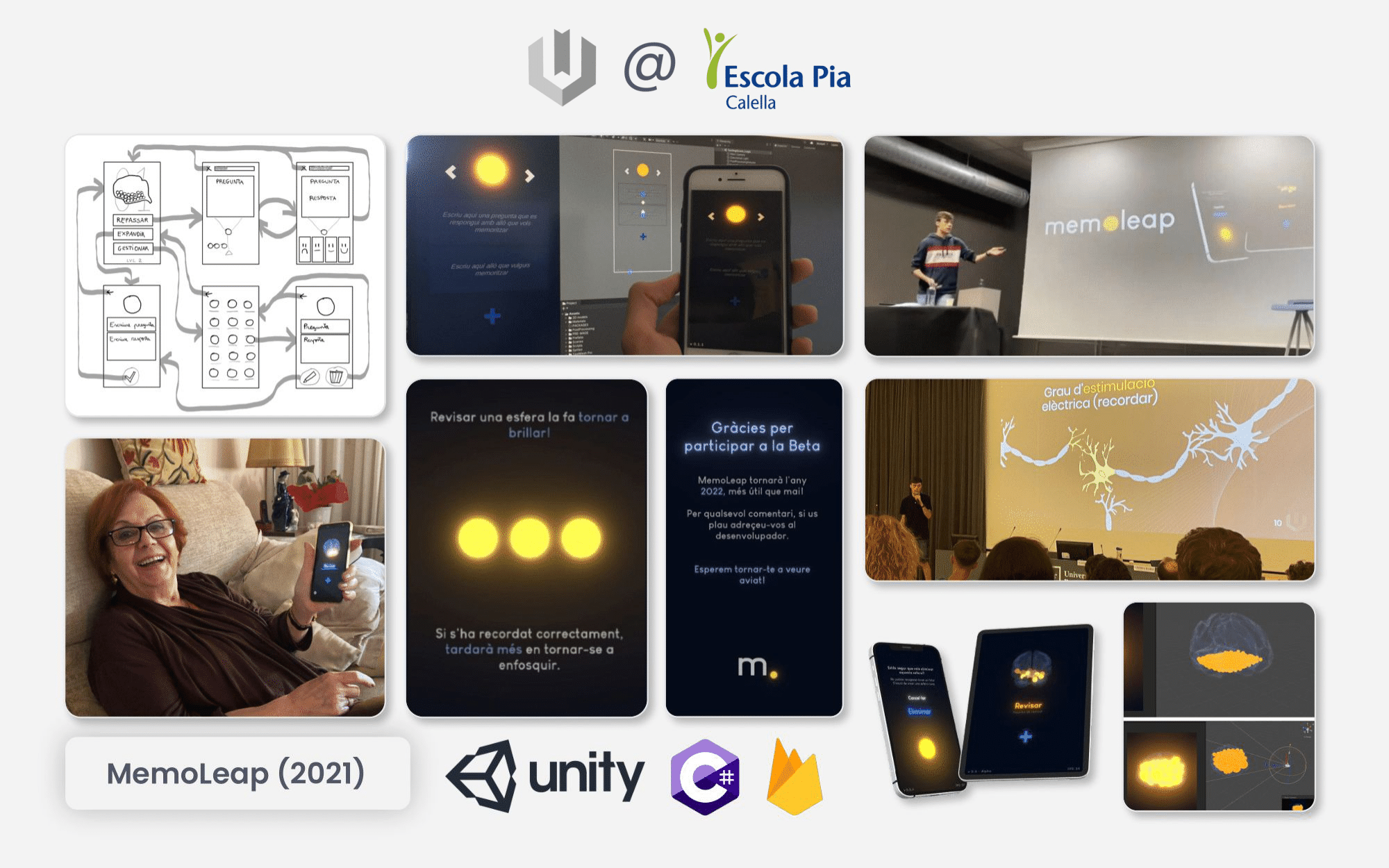
Developed as a TDR (high school project), it was a visually-appealing, neuroscience-based Spaced Repetition app to optimize memorization, adapting content review intervals to user performance for a drastic increase in learning efficiency. I used it daily to comfortably memorize the hundreds of dates we were supposed to recall for subjects like History. It was not only my first app, but my first truly useful project for a handful of very committed DAUs (including myself).
Filled with technical debt due to it being my first mobile app, it was impossible to meaningfully improve it without a complete overhaul. Its usefulness for students was tied to the importance given by the education system to the unaided perfect recall of information. And this is increasingly less rellevant in the real world, given the age of information abundance we live in. Lost interest on it as soon as I, too, stopped caring about memorizing arbitrary information; feeling that I have much more interesting things to bring to the table other than recall.
“LoyalPass”, an app to reward local community participation (2022)
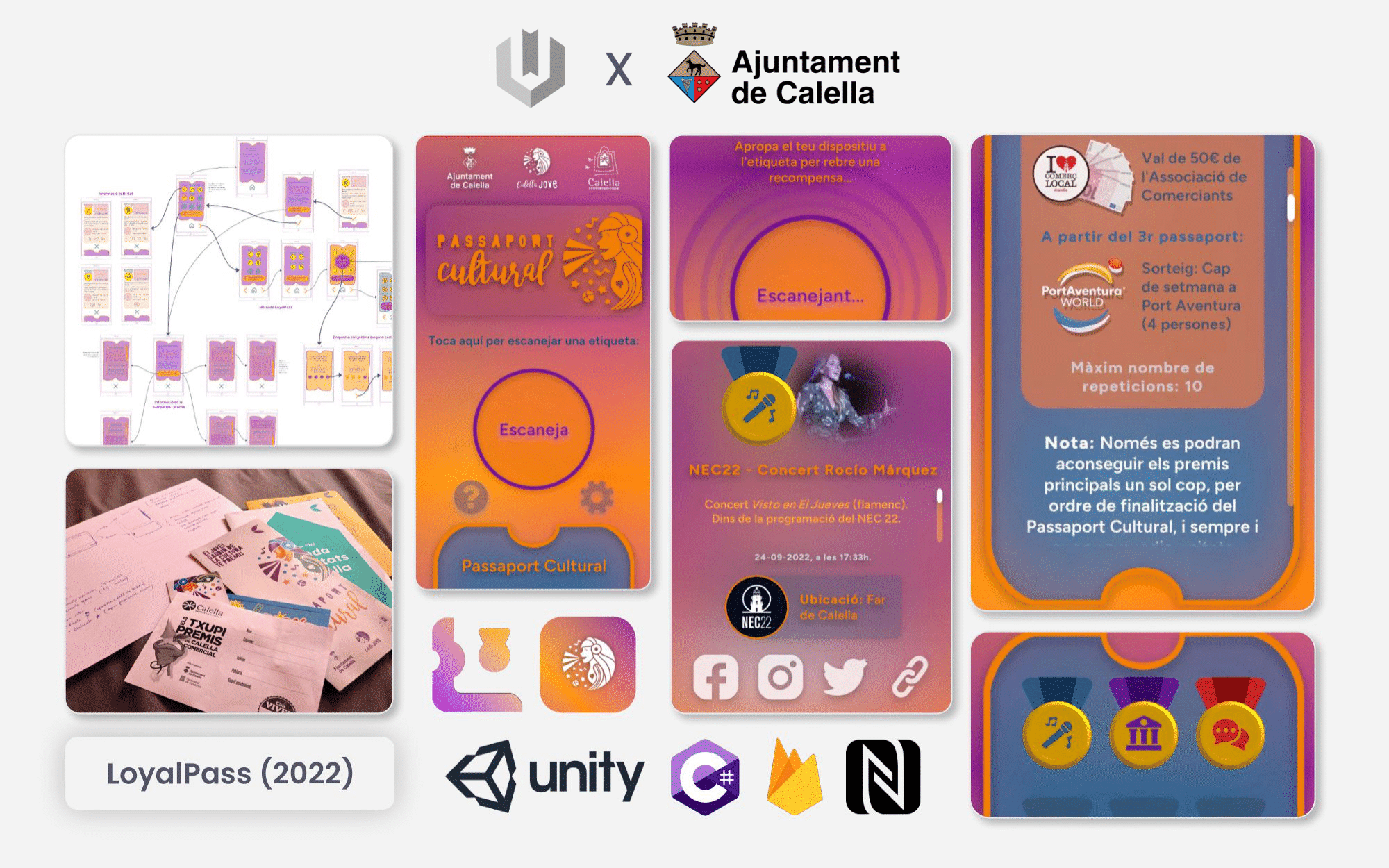
Demo about a secure system for registering citizen attendance on local activities, to reward them with discounts and gifts offered by the town hall. Side hustle most of summer 2022.
Despite client enthusiasm, the project’s scope was not proportional to the marginal value it provided to its real end users, the neighbours; critically limiting its adoption by the population (which was the actual client’s goal). It required a whole backend infrastructure, custom internal tooling, a seamless mobile app experience, and a manually managed fleet of portable NFC-enabled registering points; only to get some minor perks at local shops. Lots of frictions, not worth the rewards. Both to the population as users, and to me as the lead dev.
Last but certainly not least, there was no product-founder fit, especially once the technical problem was solved: tech to simply and securely register attendance with a phone. The long list of reasons why this was the case can be contextually deduced.
Mety AI (2023)
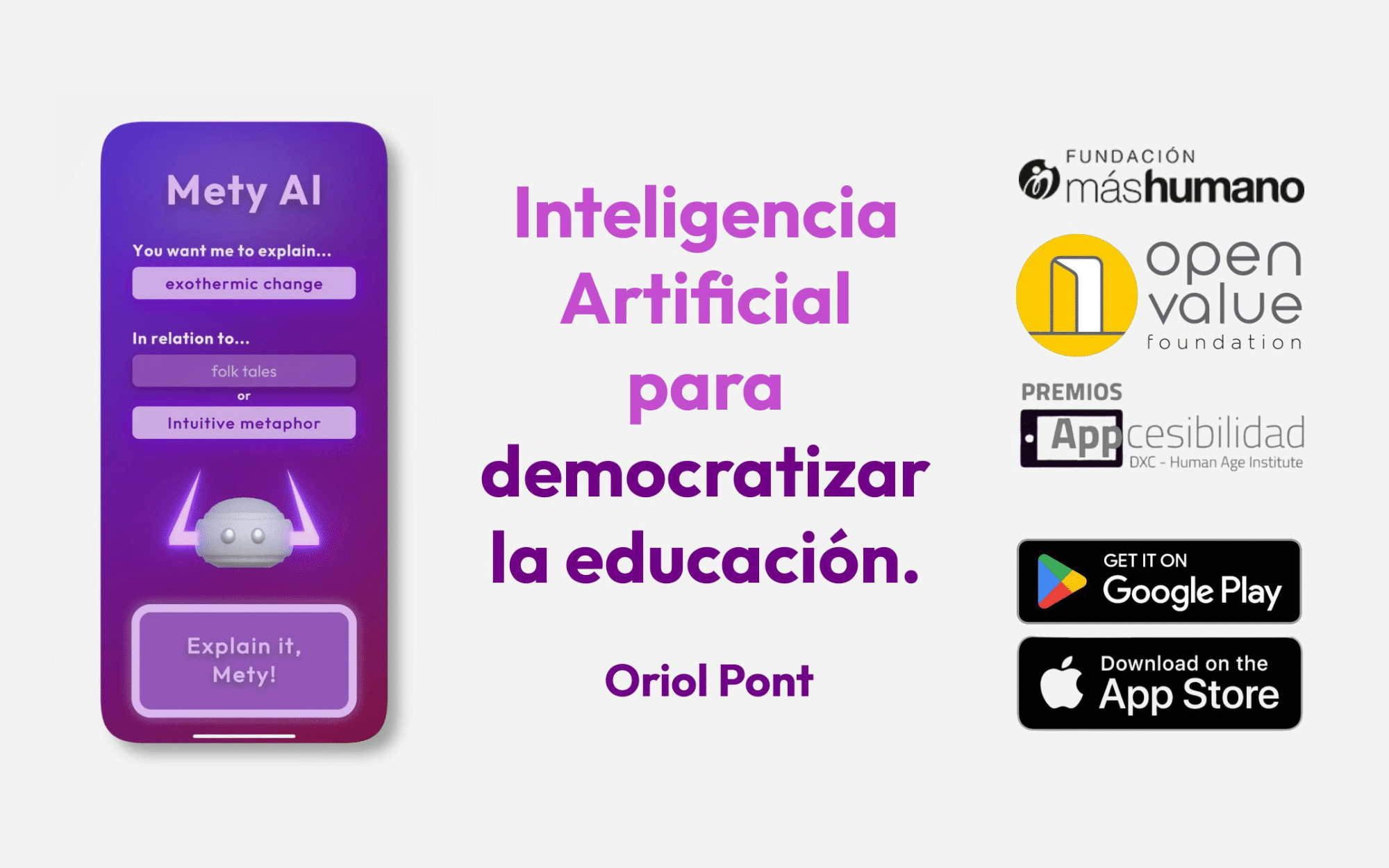
A tool that teaches concepts using insightful analogies. Won “Most Socially Impactful Project” at nationwide #PremioJóvenesMáshumano, and Honorable Mention at “Premios Appcesibilidad” by Human Age Institute.
Early full-stack development of a consumer EdTech AI app. Simply put, an accessibility-first UI/UX, consistent across devices and platforms, that allows getting good analogies to understand concepts on demand.
This early experience taught me lots of lessons, from the need to move to more appropiate tech stacks, to everything not related to coding, such as handling distribution. Among many other anecdotes, a few weeks after launching, I reimplemented the economy system to pivot the business model from ad-based to freemium, getting paid customers across the world as my first (passive) internet money.
“Zonaspot”, a hunting communication service to make the forests safer (2023)
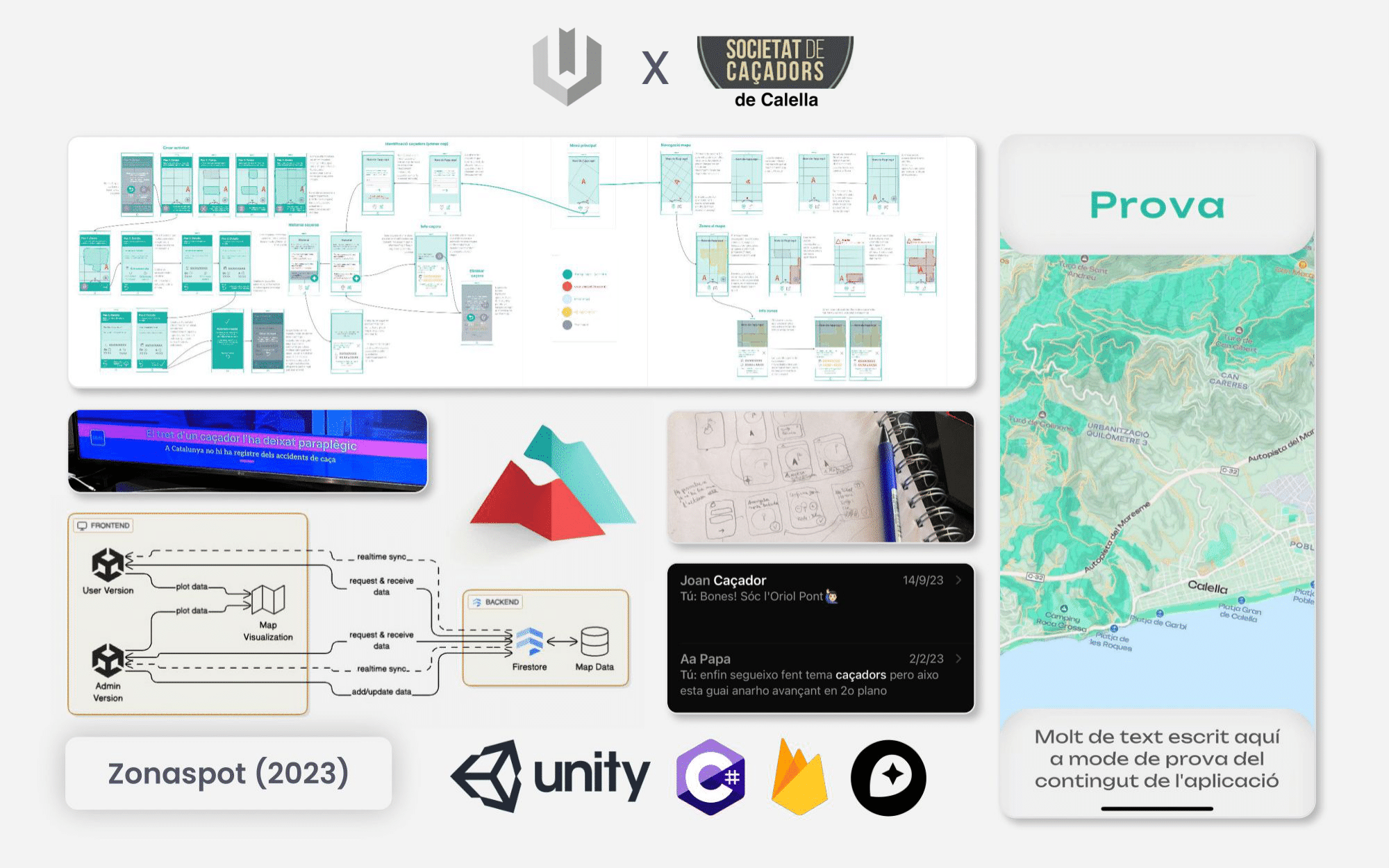
An original idea from my father, a lawyer who is into mountain cycling like me. It was a plan for a system that would allow hunters to notify digitally where they are handling their hunting activities, to let other people know their presence and plan in advance. This could make the mountains safer, and allow to better legally cover hunters that indicate clearly where their activities are being done, creating a legally-incentivized win-win scenario.
This was the first project I did NOT build entirely first, but instead I created the minimum resources (sketches, tech demos,…) required to showcase the vision to potential users and gather feedback.
Abandoned it due to the high social sensibility of the topic, what’s at stake, and the feasibility difficulties in making senior users accurately indicate via an app where they hunt against their natural unwillingness. A few reunions were enough to see that it was not what users wanted.
“Overoom”, a vision for the future of real estate showcasing (2023)
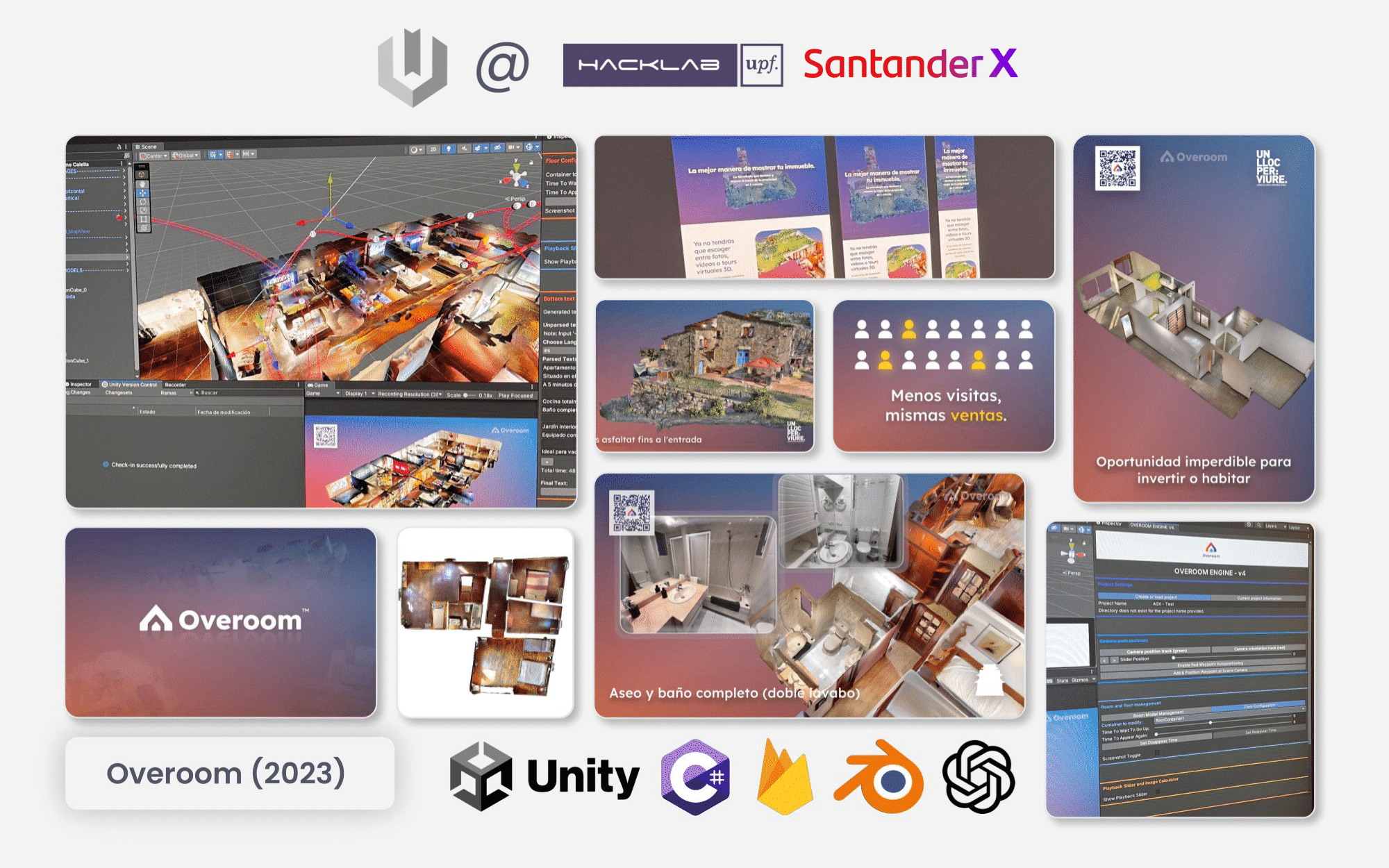
Made as a solution to my frustrations when having to visit college appartments, it was a service for transforming in-person property viewings into complete, engaging summary videos. It also went through Banco Santander’s Explorer program, and got the support of UPF’s HackLab.
Overoom’s signature format was an animated merge of 3D scans and photos, based on a custom Unity-based showcasing engine. 3D inspecting the property scan was a cool-looking niche feature, but very complex to scale: either requiring specialized hardware (LiDAR, as I did) or emergent neural techniques for 3D reconstruction from images (Gaussian Splatting and similar ones I was into - felt like living in the future as of 2023). The format was built on cutting-edge tech, not on what was “just good enough” to provide its value proposition cost-effectively. I “made it great first”, and then struggled making it cheap; should’ve gone the other way around. The low end eats the high end.
It was a great MVP: it served its purpose of quickly iterating the idea on the market, to challenge assumptions and take informed decisions of what was next, alongside my users. Proving, once again, that a few weeks can be worth a lot.
Also a reminder that “being irreplaceable is a double-edged sword.”
“Benefan” (Tech-for-good video-call app platform, 2024)
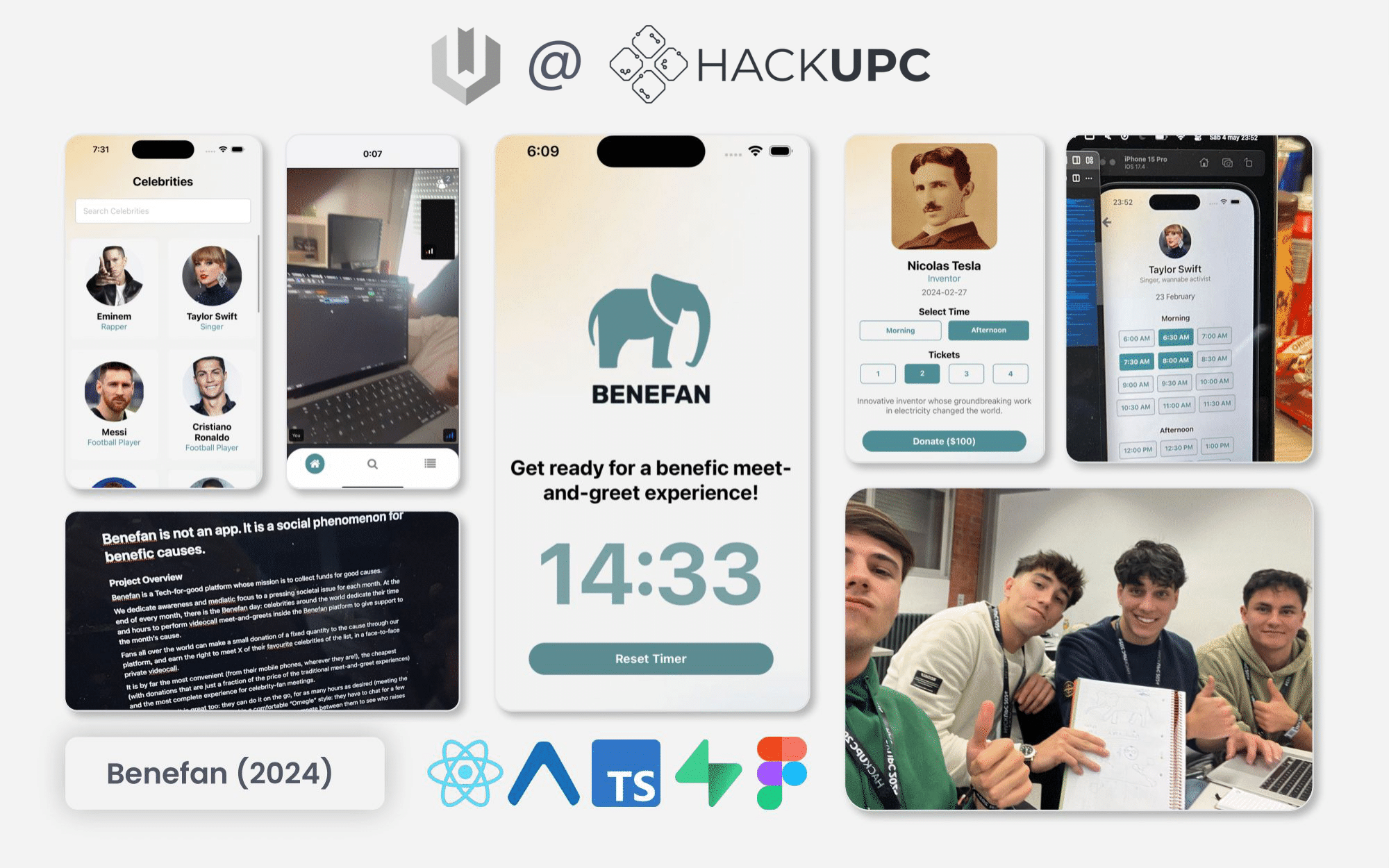
My first hackathon participation, and first native mobile app. Inspired by a simple sketch of an elephant, our team created Benefan, a platform that combines the excitement of meeting celebrities with the joy of supporting causes that matter. With Benefan, fans donate to the month’s cause to gain private Omegle-style video calls with their favorite celebrities.
Despite being our first experience with a modern mobile tech stack (Expo, React Native, Typescript) before AI MVP builders were a thing, we successfully made a visually-appealing proof of concept that implemeted in-app video-calling too. Done in 36 hours at HackUPC 2024, our first hackathon. A new class of adventure, and an instance of it that we will never forget.
“CURA-t” (Healthcare services search app, 2024)

Our team pitched CURA-t: a platform to ease the process of finding and scheduling medical services, recommending in 1-click the most suitable centers to fulfill the user’s healthcare needs.
First time building with Flutter/Dart, it is a quick tech demo showcasing the concept and implementing basic features, like 3rd party auth, location services, and database queries. Final project of “Software Engineering” subject at UPF, implemented in an afternoon.
“Visybox”, an energy-efficient, cloud-synced TV display (2023)
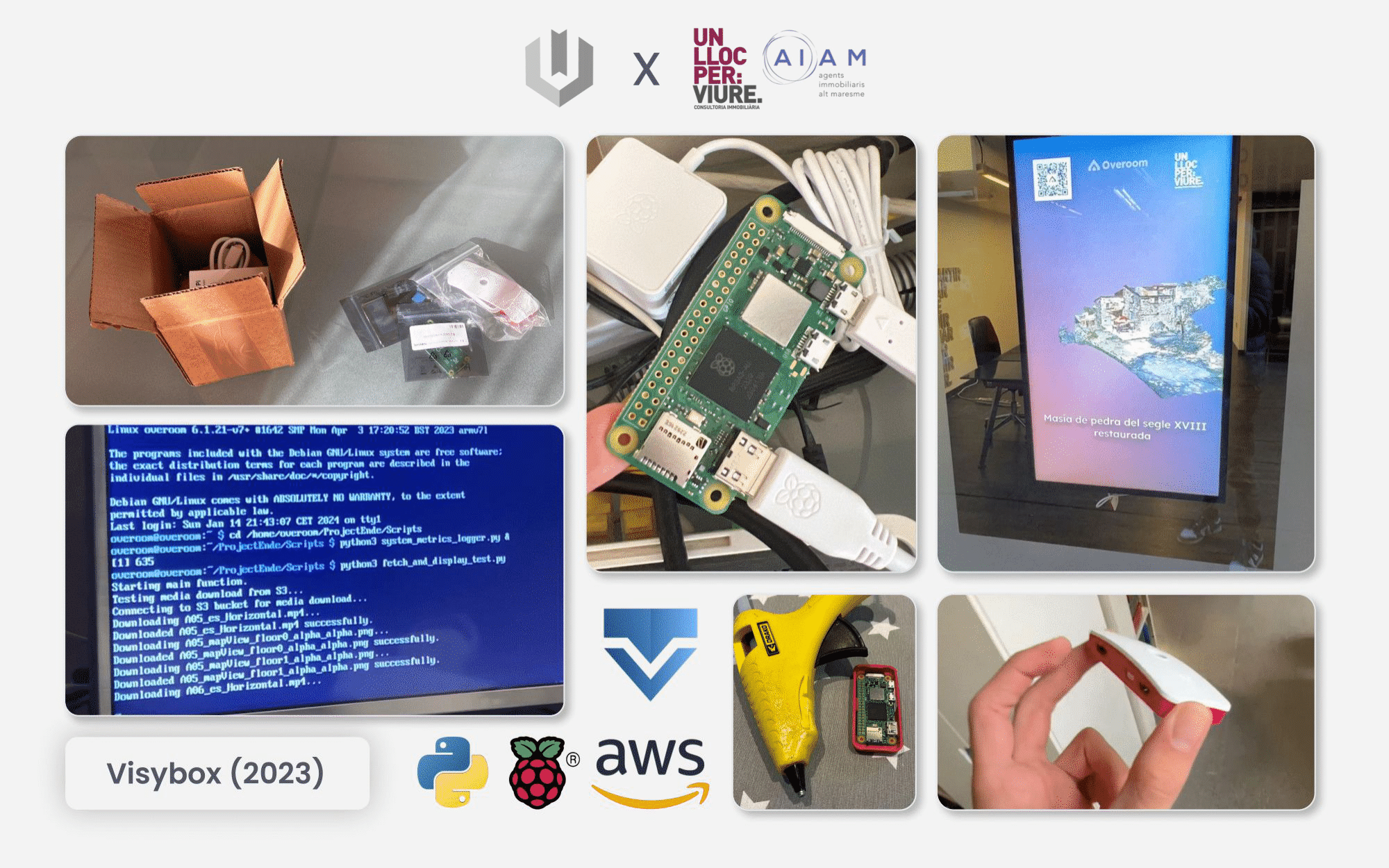
TV display device, running a lightweight Linux-based OS and an orchestrated set of Python scripts. It continuously played media (such as Overoom videos) synced from the cloud wirelessly, while being entirely powered from a TV’s USB plug (!). This made it a high-quality, plug-and-play approach to turn a TV into a remotely-managed 24/7 media display. With a logo design I’m quite proud of, derived from Overoom’s.
There was no market for it. It competed against both much cheaper alternatives, such as manual “pendrive”/USB stick management, and also higher-end dedicated monitor solutions. Simply put: the problem had already been solved, not as elegantly as with this solution, but still fulfilling the needs of the different kinds of users.
The cherry on top: the complexity of non-digital product development, distribution and maintenance. Software engineers quickly get used to iterating fast and shipping at world scale and at no cost at all, which is non-trivial in the physical world. “Hardware is hard”, they say.
“C-Forge”, serverless templatized media rendering (2024)
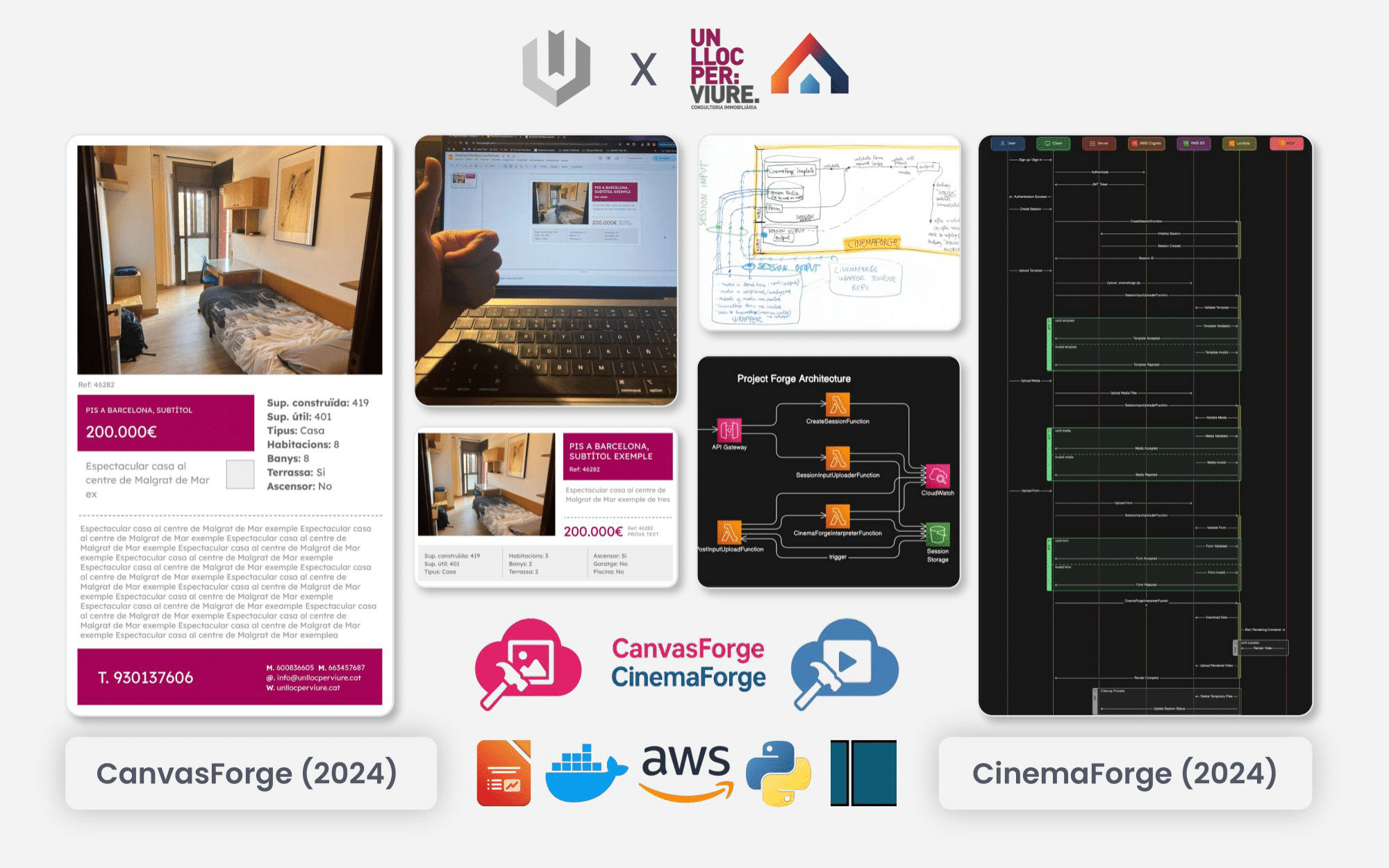
Started from open-and-parseable formats for photo/video editing projects, and standarized on a lightweight sidecar file expressing the project as a function of a set of inputs. This allowed editing a composition in a comfortable UI-based existing tool (Slides, Shotcut), yet be able to turn these into programatic templates that can be created and rendered on-demand in the cloud, using just a CLI.
In an exploration for scaling the production of Overoom videos, the primary motivation was being able to run such an automatable pipeline on the cheapest enviroment available, which I assumed was short-lived serverless functions that leveraged generous provider’s free tiers. I overlooked an even cheaper/scalable place where to run the compute intensive job: on the client side, virtually for free at any scale, and with an arguably much promising future. This required a different tech stack and approach altogether. I could have pushed these two paradigms a bit further, but the root issues of Overoom itself were a sufficient reason to also stop the development of complementary tools once I lost interest.
And, in any case, drastically reducing the cost of a “solution” does not matter if it isn’t solving an important enough problem, even despite the technical enjoyment of building these approaches.